 Skip to content
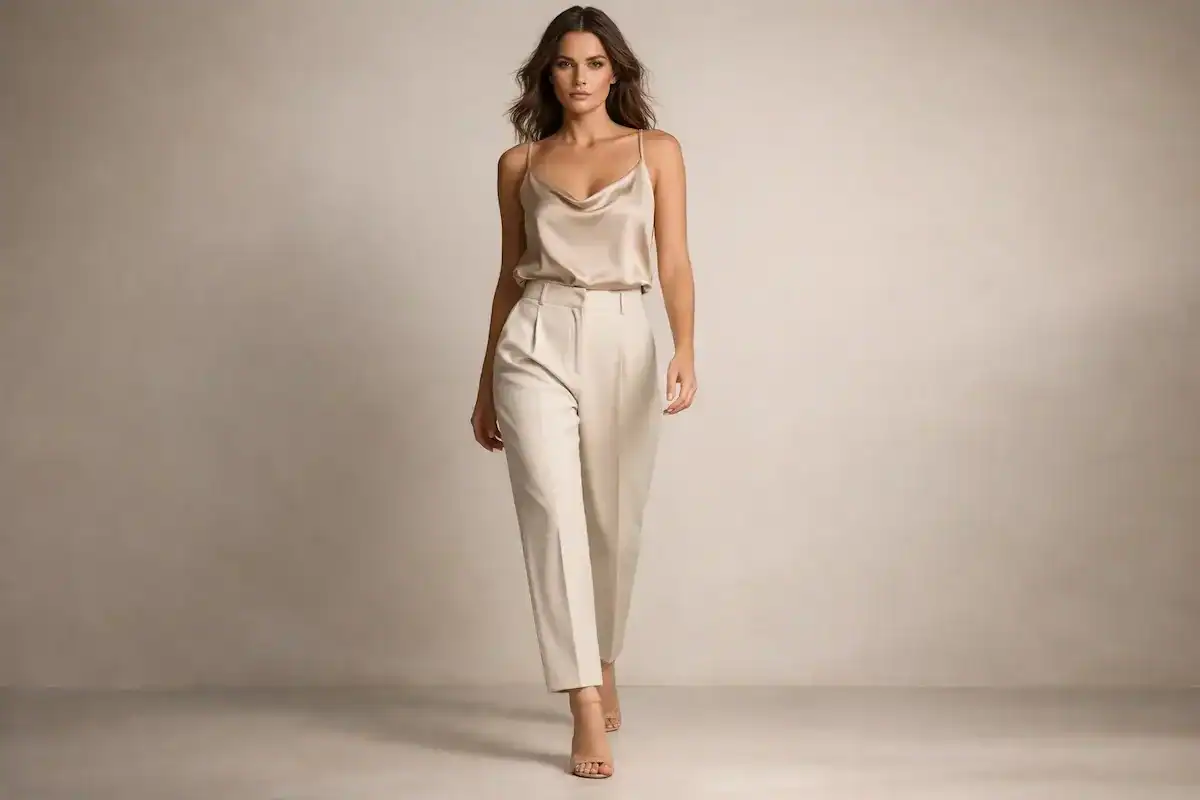
The first time I tried to dress like the Victoria’s Secret runway, I got it completely wrong. Specifically, I threw on a satin slip, sky-high heels, and big hair—the whole fantasy.
However, instead of looking effortless, I looked like I was headed to a costume party.
The mistake wasn’t ambition; rather, it was a misunderstanding of the illusion. What the show sells as fantasy is actually precision. The lingerie isn’t the secret—the engineering is.
Over the years, I’ve watched the runway not for nostalgia or spectacle, but to study how garments behave under pressure—movement, lighting, posture, and repetition.
Ultimately, when you strip away the wings and theatrics, what’s left is a masterclass in tailoring, fabric physics, and controlled restraint. Confidence on that stage isn’t simply styled into existence; consequently, it is constructed.
The Architecture of Effortless: Why VS Styling Is a Masterclass in Fit
Runway styling here isn’t designed for still images. Instead, it’s designed for motion—walking, turning, posing, and holding posture under harsh lights.
For this reason, it remains such a useful reference point for understanding fit in real life.
Nothing about these looks is casual; on the contrary, they are rigorously controlled. When you rewatch the runway with a technical eye, you start noticing what isn’t happening:
-
First, there is no pulling at the hips.
-
Second, you see no collapsing bodices.
-
Furthermore, no straps dig into skin halfway down the catwalk.
That absence is intentional. Indeed, fit has been engineered out of the equation.
The “Millimetre” Rule: How Precise Alterations Create Silhouette
Every piece on that runway has been altered obsessively—sometimes down to the millimetre. The goal isn’t to make garments tighter; in contrast, it’s to eliminate “fabric collapse.”
As a result, satin slips skim instead of cling, and lace bodysuits hold tension without stretching out. Additionally, waistlines land exactly where the body narrows, not where trends dictate.
This precision is what creates that unmistakable polish. Essentially, when fabric doesn’t fight the body, confidence reads as effortless.
This is also why recreations often fail. For instance, a slip dress that pulls across the hips or caves at the chest immediately loses its authority. The garment isn’t necessarily wrong, but the fit certainly is.
Eliminating Visual Friction: The Art of Invisible Footwear
Footwear on the runway is rarely the star—and that’s the point. Specifically, shoes are chosen to disappear into the leg line.
By using nude patent stilettos or metallic sandals matched precisely to skin tone, the stylists create one continuous visual column from hip to floor. Consequently, legs look longer not just because heels are high, but because nothing breaks the line. In short, the moment a shoe competes with the outfit, the illusion collapses.
Fabric Physics: Choosing Materials That Move
Fabric choice is where the difference between runway logic and fast-fashion imitation becomes impossible to ignore. Particularly under stage lighting, cheap materials expose themselves instantly. Therefore, the show relies on textiles that perform.
High-GSM Silk vs. Fast-Fashion Satin
High-GSM silk and heavyweight satin behave differently because they’re built differently. Because they have higher density and are often lined, they hold tension without wrinkling like tissue paper.
Conversely, fast-fashion satin collapses under its own weight. It creases after one wear and subsequently loses its sheen after a few washes. If you’ve ever noticed straps stretching strangely by the third wear, you’ve seen fabric failure in real time.
Translating the Runway: A Practical Guide to Street-Style Elegance
I don’t copy runway outfits. Instead, I copy the logic behind them. That distinction changes everything.
Balancing Softness with Structure: The “Lace and Denim” Formula. The runway constantly balances softness with grounding. For example, a lace camisole works because it’s paired with tailored trousers. Similarly, a sheer blouse makes sense with straight-leg denim. If you’re looking for more ways to ground these delicate textures, learning how to style a denim skirt can help you solve common fashion dilemmas when mixing high-low pieces.
The Pro-Tuck: Maintaining Fluidity. Furthermore, consider the “French Tuck.” When wearing a silk cami, avoid fully tucking it in, as that kills movement. Instead, tuck just one inch at the front. Thus, you create a shape without flattening the drape.
Final Verdict: Is the “Angelic” Aesthetic Still Relevant?
In conclusion, while trends change and branding shifts, the fundamentals remain untouched. Clothing must move with the body, and fit will always matter more than novelty. Ultimately, I watch the runway like a student of proportion. Beyond the wings, that’s where the real education has always been.
