 Skip to content
A dress shirt can look expensive, tailored, even sharp on the hanger and still feel completely wrong the moment you button it up.
Too tight across the chest, Sleeves sliding past your wrists, A collar that feels restrictive by midday, Most fit issues are not about the brand.
They come from not fully understanding measurements, and that is where things get confusing very quickly.
Neck size, sleeve length, chest width, shoulder width they are not interchangeable, and they are definitely not guesses.
If you have ever relied on medium and hoped for the best, you are not alone. In this guide, I will break down how dress shirt measurements actually work and how to use them to get a fit that feels deliberate, not accidental.
Gather Your Tools
Before you measure anything, slow down and set yourself up properly. You need a soft tailor’s measuring tape, a mirror, and ideally someone to help with sleeve length.
Measuring yourself with a metal construction tape or guessing against a wall will give you numbers that look precise but are completely misleading.
Wear a lightweight T shirt or measure over bare skin, stand naturally, and resist the urge to suck in your stomach or square your shoulders like you are posing for a photo.
The goal is accuracy, not ego. Good measurements reflect how you actually stand and move during a normal workday, not how you wish you did.
How To Measure Your Collar
Collar size is one of the most misunderstood measurements because people often measure too tight. Wrap the tape around the base of your neck where the collar actually sits, not higher under your jaw.
You should be able to slide one finger comfortably between the tape and your neck. If the tape is flush against your skin with no room, the shirt will feel restrictive after a few hours, especially in warmer climates or during long office days.
In the US and UK markets, collar size is usually listed in inches, so round to the nearest half inch. A properly measured collar should allow you to button the top button without strain while still looking clean and structured.
How To Measure Your Sleeve Length
Sleeve length is rarely just arm length. It runs from the center back of your neck, across your shoulder, and down to your wrist bone. This is where having a second person helps.
Start at the prominent bone at the base of your neck, measure across the shoulder seam area, then continue down the outside of the arm with your elbow slightly bent until you reach the wrist bone.
If you measure with your arm locked straight, the sleeve may ride up when you move. In professional settings, especially in corporate environments in Tier 1 countries, the cuff should end exactly at the wrist bone and show about a quarter to half an inch beneath a suit jacket.
That small detail separates intentional dressing from sloppy fit.
How To Measure Your Chest
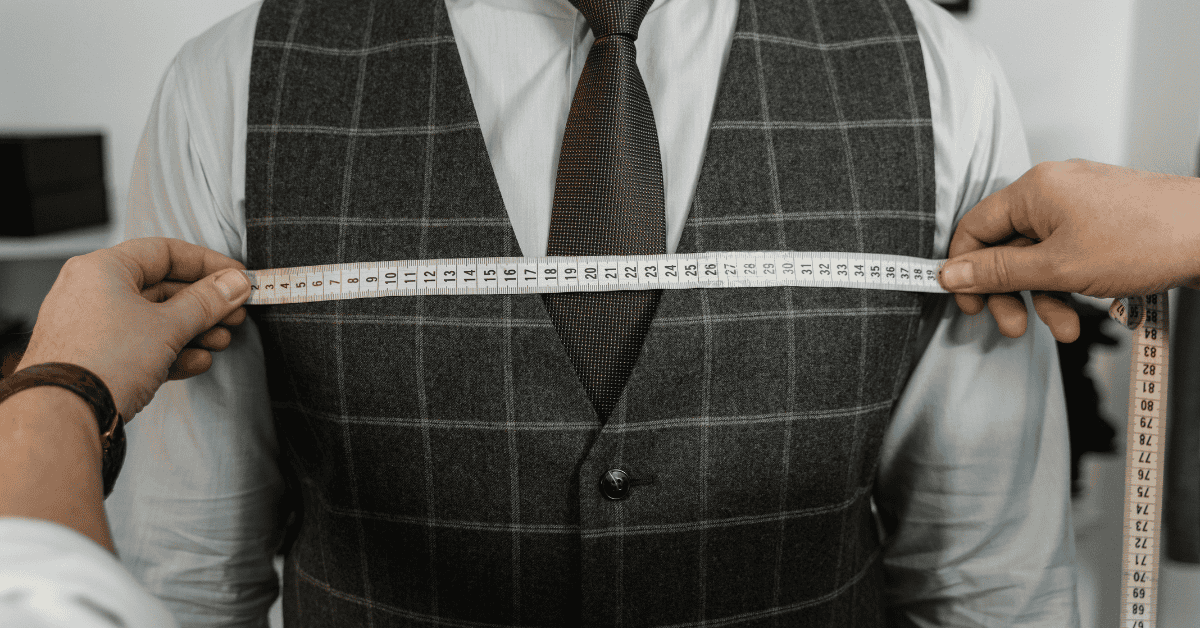
Chest measurement determines how the shirt sits across your torso and whether buttons pull when you move. Place the measuring tape around the widest area of your chest, typically sitting just beneath the underarms and running straight across your upper back. Make sure the tape stays level and snug without digging into the skin.
Keep the tape level and breathe normally. Do not expand your chest or hold your breath. The shirt should skim the body without pulling at the buttons or creating horizontal tension lines.
If you lift your arms and the shirt strains across your chest, it is too small. If excess fabric billows when you tuck it in, it is too large. The right chest measurement allows movement without distortion, which is critical if you spend long hours sitting at a desk or presenting in meetings.
How To Measure Your Waist
Waist measurement affects how clean the shirt looks when tucked in. Measure around your natural waistline, which is typically slightly above your belt line and below your ribcage.
Do not measure over bulky clothing, and do not pull the tape tight. Many men in the US and Australia fall between standard and slim fits because brands grade waist differently.
If your waist measurement is significantly smaller than your chest, you may need a tailored or athletic cut to avoid excess fabric. A properly fitted waist prevents ballooning at the sides and reduces the need for constant readjustment throughout the day.
How To Measure Your Neck
Although collar and neck are closely related, measuring your neck independently helps confirm accuracy. Place the tape around the thickest part of your neck, keeping it parallel to the floor.
Stand upright but relaxed. This measurement validates your collar size and can reveal if you have been wearing shirts that are consistently too tight. A tight neck measurement often leads to discomfort, visible strain at the top button, and a tie that never sits properly.
Comfort at the neck is not a luxury detail. It determines whether you feel composed or distracted during important moments.
Double Check and Record
Once you have all your numbers, measure again. Small errors of even half an inch can change the entire fit. Record your measurements in both inches and centimeters if you shop across US, UK, or European brands.
Keep them saved in your phone or wardrobe notes. Brands size differently, and knowing your core measurements allows you to interpret size charts rather than guess.
If you notice consistent discrepancies when ordering from a particular brand, adjust accordingly. Treat your measurements as personal data, not a one time task.
Using Your Measurements
Measurements only matter if you know how to apply them. When shopping online, compare your numbers directly to the brand’s size chart rather than relying on labels like slim or classic.
When buying off the rack in store, use your collar and sleeve length as non negotiables, then assess chest and waist fit in the mirror. If one area fits and another does not, tailoring is often the smarter investment than sizing up or down.
In professional markets across the US, UK, and Canada, a well fitted dress shirt signals attention to detail and self respect. Once you understand your measurements, you stop guessing and start choosing with intention.
