 Skip to content
I once showed up to a client’s Friday “smart casual” lunch in a navy blazer, crisp OCBD, charcoal trousers, and polished derbies.
- I felt sharp
- I felt safe
I walked in and immediately knew I’d misread the room. Everyone else was in knit polos, relaxed chinos, and suede sneakers. I looked like I was there to pitch, not eat.
That was the moment it clicked. Most men don’t misunderstand style. They misunderstand dress codes. And the two that cause the most damage are smart casual and business casual.
Smart Casual: The Art of Intentional Relaxation
Smart casual isn’t lazy, it’s a decision.
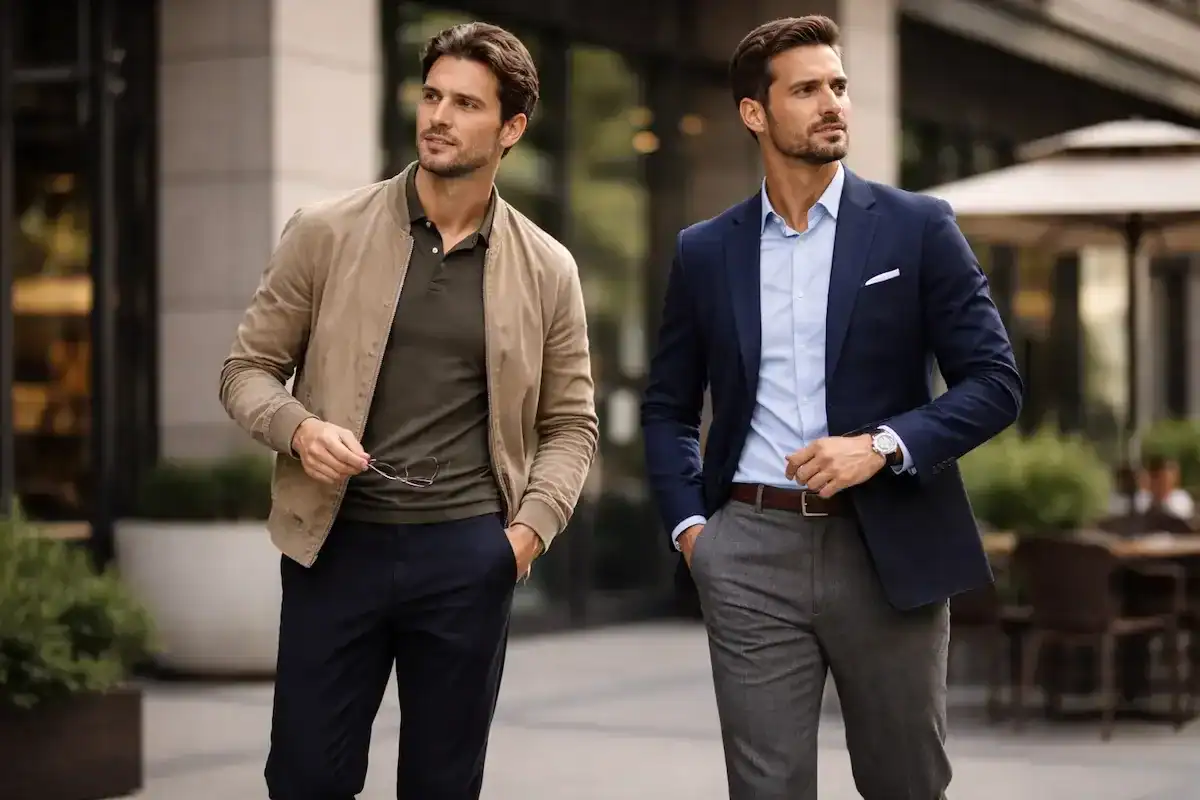
It’s what you wear when you want to look considered without looking corporate. The message isn’t “I’m important.” It’s “I know where I am.” This is the uniform of creative offices, gallery openings, and weekend dinners where someone might still notice your shoes.
Fit matters more than formality here. Texture does more work than structure. A knit polo in Pima cotton beats a stiff shirt every time. A brushed suede loafer feels right where a polished derby feels loud. Chore jackets, deconstructed blazers, merino crewnecks, and well-cut chinos all live comfortably in this space.
If it looks too crisp, it’s probably wrong.
Business Casual: Maintaining the Professional Edge
Business casual still leans corporate, even when offices pretend otherwise. The expectations are quieter, but they’re still there.
You can drop the tie and skip the full suit, but polish stays non-negotiable. Shirts should hold their shape. Trousers should drape cleanly. Shoes should read as intentional, not convenient.
Sneakers are the most common gamble here, and most men lose. In Tier 1 offices, the safer middle ground is still a leather derby or a clean loafer. Not because they’re exciting, but because they don’t raise questions.
The Fabric Divide: Why Texture Matters More Than the Item
This is where most advice falls apart.
The same garment can land in two different categories depending on the fabric. A blazer in high-twist wool or worsted wool signals business. The same cut in flannel or linen immediately relaxes the tone. Poplin shirts look sharper under office lighting. Oxford cloth softens the message without trying.
Smart casual thrives on matte finishes and texture. Think brushed cotton, seersucker, linen blends. Business casual prefers smoother surfaces that hold structure through a long day.
It’s rarely about what you’re wearing. It’s about how it reads from six feet away.
Footwear: The Ultimate Deciding Factor
Shoes do more classification work than any other item.
Swap sneakers for leather loafers and the same outfit suddenly looks meeting-ready. Change polished shoes to suede and the tone shifts instantly. Rubber soles, visible stitching, and softer leathers all pull an outfit toward smart casual. Leather soles and clean lines push it back toward business.
If you’re ever unsure, look down. The answer is usually there.
Common Pitfalls to Avoid in Tier 1 Cities
The tech-bro fleece vest doesn’t age well outside its ecosystem. Sagging chinos signal neglect, not ease. Cheap fast-fashion fabrics collapse under office lights and give themselves away by lunchtime.
Collars curl. Knees bag out. Synthetic trousers shine in all the wrong ways.
A smart casual outfit with tired fabric looks careless. A business casual outfit in shiny polyester looks worse.
The Strategy of the Bridge Wardrobe
The smartest wardrobes are built around overlap.
A navy unstructured blazer that works with both wool trousers and dark denim. A white OCBD with enough body to stand alone. Mid-grey trousers in a fabric that holds shape without looking stiff. Brown leather loafers that don’t scream boardroom or brunch.
These pieces earn their keep because they adapt. Change the shoes. Change the shirt. The message shifts.
That’s the real skill.
Smart Casual: The Art of Intentional Relaxation
Smart casual is about making a choice. It’s the outfit you wear when you want to look like you’ve made an effort without appearing like you’re heading to a board meeting. In this space, the “middle ground” items are your best friends—pieces that feel more substantial than a T-shirt but less rigid than a suit shirt.
A prime example of this balance is the men’s band collar shirt. Because it removes the traditional collar points, it creates a cleaner, more minimalist neckline that feels modern and relaxed. It works perfectly under a chore jacket or a deconstructed blazer because it reduces bulk at the neck, keeping the silhouette sharp but approachable.
