 Skip to content
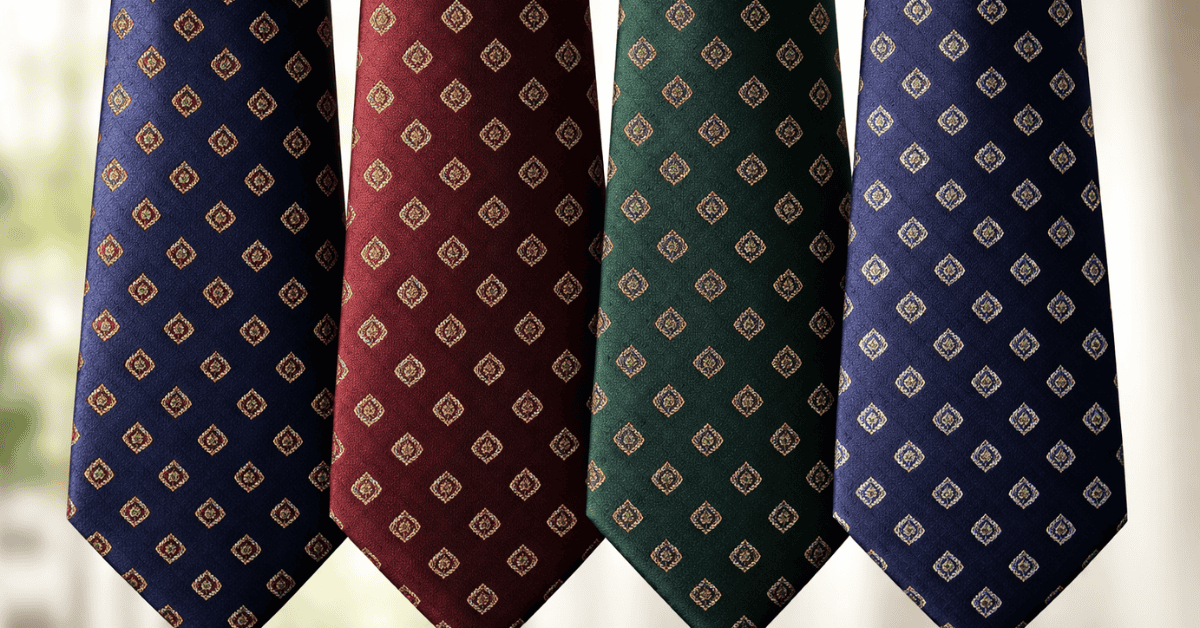
There is something quietly powerful about a well-chosen geometric foulard tie. It is not loud. It does not demand attention.
Yet in the right setting, whether it is a boardroom meeting, a wedding, or a client dinner, it signals intention and taste. The repeating medallions and structured symmetry create depth that a solid tie simply cannot offer.
Still, many men hesitate. They are unsure how bold is too bold, or whether the pattern will elevate their suit or overwhelm it.
That uncertainty is valid. Pattern scale, colour harmony, and fabric texture make a real difference. A geometric foulard can sharpen a navy suit or dull it if chosen poorly.
In the sections ahead, I will show you how to select and style one with confidence so it enhances your presence instead of distracting from it.
How & When To Wear A Foulard Tie
A geometric foulard tie works best when the setting calls for polish without rigidity. It thrives in environments where personality is welcome, but professionalism is non-negotiable, think corporate offices in New York, finance meetings in London, or formal social events in Sydney.
The repeating motif gives visual rhythm, which makes it ideal for business suits in navy, charcoal, or mid grey. It is less suited to ultra-casual tailoring or heavily patterned jackets.
If your suit already carries a strong check or stripe, a foulard can compete rather than complement. The sweet spot is structured tailoring, clean lines, and controlled confidence. Wear it when you want to look intentional, not experimental.
History of Geometric Ties
Geometric foulard patterns trace back to traditional European silk weaving, particularly from English and Italian mills that favoured small, repeating motifs for formal neckwear.
The design language was deliberate: symmetry conveyed order, refinement, and restraint. In the early twentieth century, these patterns became staples in business and diplomatic wardrobes because they photographed well, held visual structure under tailoring, and did not distract from the wearer’s authority.
Over time, designers refined scale and contrast, shifting from dense micro motifs to slightly larger medallions that read better in modern office lighting and digital environments. The core principle, however, never changed: repetition signals sophistication.
Events to Wear Geometric Ties To:
Geometric foulard ties are exceptionally versatile across formal and semi-formal occasions. They perform well at weddings where a solid tie feels flat, but a bold stripe feels aggressive.
They are dependable at corporate presentations, investor meetings, and industry conferences where you need subtle distinction without trend-driven flair. They also transition smoothly into evening charity events or formal dinners when paired with a dark suit and crisp white shirt.
What they are not ideal for are relaxed outdoor ceremonies or creative industries where softer textures or knitted ties feel more authentic. Context matters. The foulard reads structured, so the environment should echo that tone.
How To Match Geometric Foulard Silk Ties
Matching a geometric foulard silk tie is about proportion and contrast. Start with scale. If the pattern is tight and intricate, it pairs well with solid shirts and clean suits. If the motif is slightly larger, keep everything else restrained to avoid visual clutter.
Colour coordination should rely on shared undertones rather than exact matches. A burgundy foulard with subtle navy detailing pairs naturally with a navy suit because the undertone connects the look.
Avoid competing shine levels as well. High gloss silk against a heavily textured suit can feel disconnected. The goal is harmony, not symmetry. Let the tie provide interest while the suit frames it.
Foulard Tie & Shirt Combination
The safest and often most refined choice is a crisp white or light blue shirt, which allows the geometric pattern to breathe. However, subtle micro stripes or fine checks can work if the scale differs clearly from the tie’s motif.
The rule is simple: patterns should not compete for dominance. If your shirt carries a pattern, it must be quieter and more spaced out than the tie. Collar structure also matters.
A medium spread or classic point collar supports the symmetry of a foulard pattern far better than an exaggerated cutaway. Fit and collar stiffness influence how cleanly the tie knot presents, and with geometric designs, alignment is everything.
Essential Geometric Foulard Neckties
Not all foulard ties are created equal. Quality silk with proper interlining ensures the knot holds shape and the pattern sits centred rather than twisting. Look for hand-rolled edges or precise stitching, which signal craftsmanship rather than mass production.
A navy base with small repeating silver or burgundy motifs remains a foundational choice for most wardrobes in Tier 1 markets because it transitions across seasons and industries. Deep green, muted gold, and wine tones also offer depth without becoming novelty pieces.
Build your collection around versatility first. Once you have a reliable base, then experiment with bolder colour contrasts or slightly larger motifs.
Frequently Asked Questions
1. Are geometric foulard ties appropriate for conservative corporate environments?
Yes, if the scale and colour are restrained. In finance, law, or consulting settings, stick to navy, burgundy, or dark green bases with small repeating motifs. Avoid oversized medallions or high contrast colour combinations that can read as overly expressive.
2. How much should I realistically spend on a quality foulard silk tie?
In Tier 1 markets, expect to pay between $75 and $180 for well-constructed silk with proper interlining. Below that range, fabric quality and stitching often suffer. Above it, you are usually paying for brand positioning rather than noticeable performance improvements.
3. Can I wear a geometric foulard tie to a job interview?
Yes, particularly in traditional industries. Choose muted tones and smaller patterns to project structure and reliability. For creative roles, however, a softer textured tie or subtle knit may feel more aligned with company culture. Context should guide the decision.
4. What is the biggest mistake beginners make with patterned ties?
They ignore scale balance. A bold foulard paired with a checked suit and striped shirt creates visual conflict. Beginners should anchor the tie against a solid shirt and suit until they understand how pattern proportions interact.
5. Do geometric ties work for evening formal events?
They can, especially in darker colourways like midnight blue or deep wine. Keep sheen controlled and avoid novelty colours. For black tie events, though, stick with traditional black bow ties. A foulard is better suited to formal business or semi-formal dinners.
6. How do I know if the pattern size suits my build?
Proportion matters. Larger men generally carry slightly larger motifs well, while slimmer builds benefit from tighter, smaller patterns. The tie should complement your frame, not overpower it or disappear against broader shoulders.
7. Are foulard ties seasonal or year-round pieces?
They are versatile year-round. Lighter blues and softer greens feel appropriate in spring and summer, while burgundy, navy, and forest tones transition well into fall and winter. Fabric weight matters less than colour depth in seasonal styling.
8. How should I store silk foulard ties to prevent damage?
Either hang them on a dedicated tie rack or roll them loosely and store them flat. Avoid tight knots left overnight, which crease the silk and weaken the interlining over time. Proper storage significantly extends lifespan.
9. Can I pair a foulard tie with patterned shirts confidently?
Yes, but only when pattern scales clearly differ. A fine pinstripe shirt can work if the tie motif is more prominent. If both patterns compete for attention, the result looks unintentional rather than refined.
10. Is there a risk of looking outdated with a geometric foulard tie?
Only if the pattern feels overly dense or the colours look washed out. Modern foulards tend to have cleaner spacing and sharper contrast. Choosing updated proportions and richer tones keeps the look current without chasing trends.
👉 Read Next: understanding-dress-shirt-measurements-stylevvo
